
Grants
The DuPage County Farm Bureau Foundation provides grants worth up to $350 to K-12 teachers who design an agriculture curriculum to implement in their classrooms and up to $50 to libraries to purchase agriculture books. Teacher grants may not be used for pollinator gardens or campus beautification. Projects should be focused around food production. Please see applications for more information. Applications are due by November 2nd, 2026.
2027 Teacher Grant Application
2027 Library Grant Application
2026 4-H Project Grant
This grant is designed to help 4-H members complete a successful 4-H project related to agriculture. Examples include but are not limited to, livestock, livestock care and materials (cages, halters, bottles, etc.)
DuPage County Farm Bureau 4-H Grant Application
2026 Ag in the Classroom Teacher Grant Winners
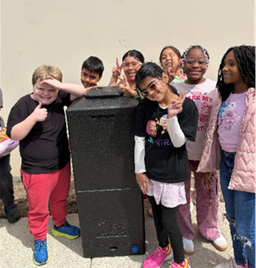
“Compost Project”
Austin Chu- G. Stanley Hall Elementary, Glendale Heights- 3rd-5th Grade
Austin used his grant funding to purchase a HotBin compost bin, which allowed his students to demonstrate composting in a simple and effective way. Students learned to separate organic waste, understand decomposition, and observe how food scraps and yard waste transform into nutrient-rich compost for the school garden. Over the weeks, students participated in collecting food scraps from classrooms and the cafeteria, adding the right mix of “greens” and “browns”, and maintaining the compost’s moisture and aeration. They monitored the compost’s progress and deepened their understanding of the natural cycle. By the end of the project, the students had a clear understanding of the composting process and why it matters.
“Classroom Wormery”
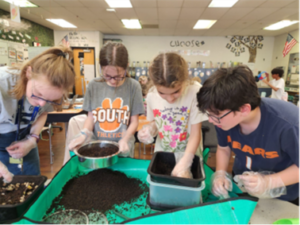
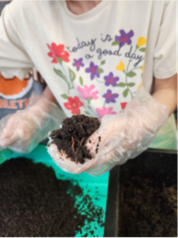
Deanna Bero- Lincoln Elementary, Wheaton- 5th Grade
With the help of the AITC grant, Deanna’s students successfully launched and maintained a classroom wormery. The primary objective of the wormery was to teach the students how worms are important decomposers in our environment. During the program, the students collected organic waste from their daily lunches, measured the moisture and acidity levels of the bins, and maintained a healthy ecosystem by preparing and weighing specific food portions and incorporating coffee grounds. The wormery was a success, and the students saw a large population growth in their worms. The students also collected high-quality worm castings which were used to pot air-purifying plants for the classroom. By managing the worm bins, the students gained practical skills and learned about composting.
“Hydroponics in the Classroom”
Thomas Grace- Madison Elementary, Wheaton – 4th Grade
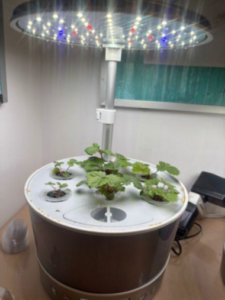
Thomas utilized the teacher grant funds to purchase an AeroGarden for his classroom. This provided the students with a unique, hands-on “living lab” where they observed biological processes in real-time without the mess of soil. The students practiced experimental design by adjusting variables like light density and nutrient levels to see how it affects growth rates. Each week they measured the plant height and graphed the results to visualize growth patterns. The students learned how hydroponics can use up to 90-98% less water than traditional farming which sparked discussions on modern agricultural solutions and food security.
“Magnified Minds: Exploring Nature in Detail”
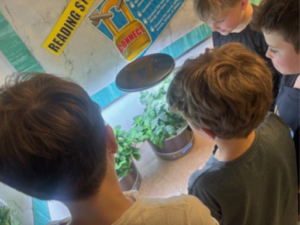
Kate Pereda & Megan Tocknell- Stone Elementary, Addison- 2nd & 3rd Grade
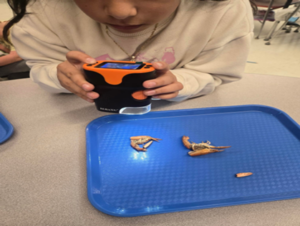
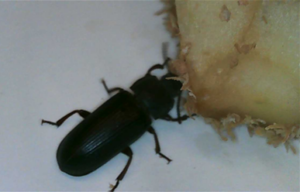
Kate and Megan combined their teacher grants to purchase digital handheld microscopes, slides, SD cards, and storage bins for their classrooms. During the program students deepened their understanding of plant and animal structures and learned how these structures help organisms adapt, survive, and grow within their environments. The 2nd graders used the microscopes during their study of insect life cycles by observing mealworms, milkweed bugs, and butterflies. The 3rd graders used their microscopes during a study of the classroom crayfish and plant structures. The microscopes were a valuable addition to the science curriculum and inspired students to ask questions and dive deeper into their science topics.
“Building a Garden Terrarium”
Mary Beth Eck- Visitation Catholic School, Elmhurst- Pre-K
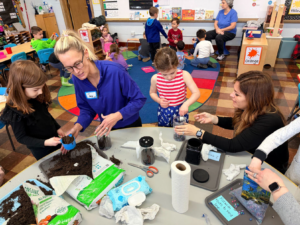
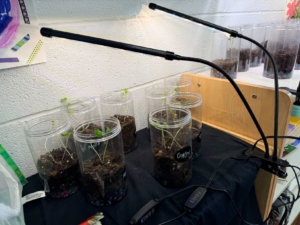
Mary Beth brought her farm unit to life by creating classroom terrariums for her pre-k students. During the unit, students learned about farm products, plant structures, and plant needs. Classroom volunteers helped the students set up their terrariums which were constructed with clear plastic jars, gravel for drainage, charcoal to prevent mold and odor, organic soil, and seeds. The students checked their soil daily to make sure it was moist and the grow lights were turned on. During the program the students grew radishes, mint, strawberries, thyme, rosemary, and romaine lettuce. To document the activity, the students kept a journal and drew pictures of the terrarium, seeds, seedlings, and plants. While they couldn’t grow their plants to harvest in the classroom, the students were excited to take their plants home and continue to water and care for them.
Library Grants
In December 2025, eight libraries across DuPage County received grants to purchase agriculture accurate books. Recipients were able to choose from books on a provided list and order them directly to the library. Thank you to everyone who participated! We’re excited to be sharing the love of agriculture all across our county!
Recent Comments